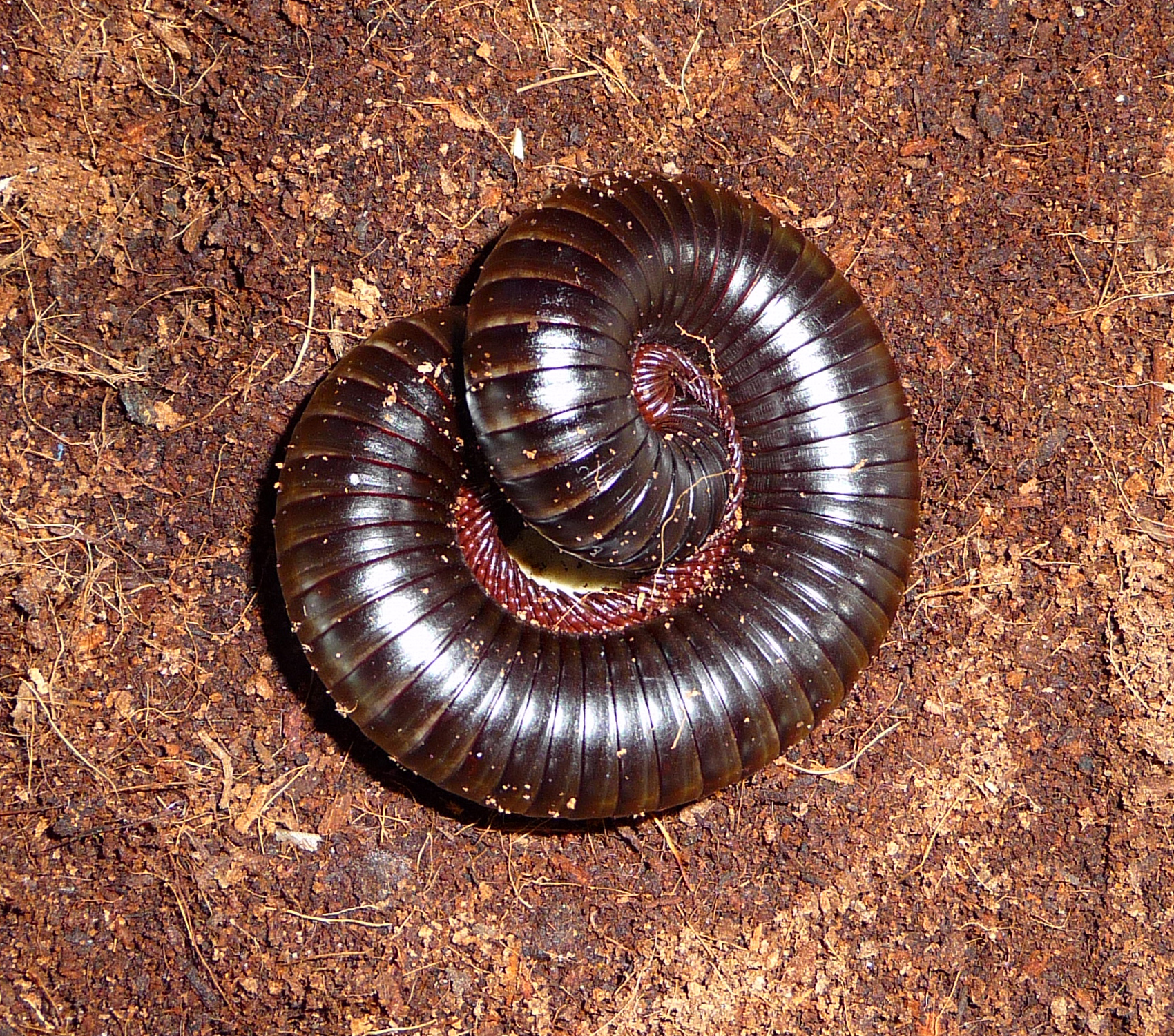
Introduction: A Marvel in Motion
In the heart of the rainforests, a creature with hundreds of legs quietly traverses the forest floor. Meet the Giant African millipede, a gentle giant of the invertebrate world.

Meet the Giant African Millipede
The Giant African millipede, scientifically known as Archispirostreptus gigas, is one of the largest millipede species in the world. These impressive arthropods can grow up to 33 centimeters long and have as many as 256 legs.
Habitat and Range
These millipedes are native to the rainforests and savannas of Africa. They thrive in warm, humid environments where they navigate the leaf litter and soil of the forest floor.
Diet and Behavior
As detritivores, Giant African millipedes play a crucial role in their ecosystem by breaking down decomposing plant material. They feed primarily on dead plant matter, aiding in nutrient cycling within their habitats.

Conservation Status
Currently, there is limited information regarding the conservation status of the Giant African millipede. However, their habitats are increasingly threatened by deforestation and habitat destruction.
Why It Matters
The Giant African millipede is vital to its ecosystem, contributing to soil health and nutrient recycling. Their presence is a sign of a healthy forest ecosystem.

FAQs
What do Giant African millipedes eat?
They primarily consume decomposing plant material, aiding in the breakdown and recycling of nutrients.
Where can you find Giant African millipedes?
These millipedes are found in the rainforests and savannas of Africa, thriving in warm, humid conditions.
How long do Giant African millipedes live?
In captivity, Giant African millipedes can live up to 7-10 years with proper care.